
CERN’s Timepix particle detectors, developed by the Medipix2 Collaboration, help unravel the secret of a long-lost painting by the great Renaissance master, Raphael
500 years ago, the Italian painter Raphael passed away, leaving behind him many works of art, paintings, frescoes and engravings. Like his contemporaries Michelangelo and Leonardo da Vinci, Raphael’s work made the joy of imitators and the greed of counterfeiters, who bequeathed us many copies, pastiches and forgeries of the great master of the Renaissance.
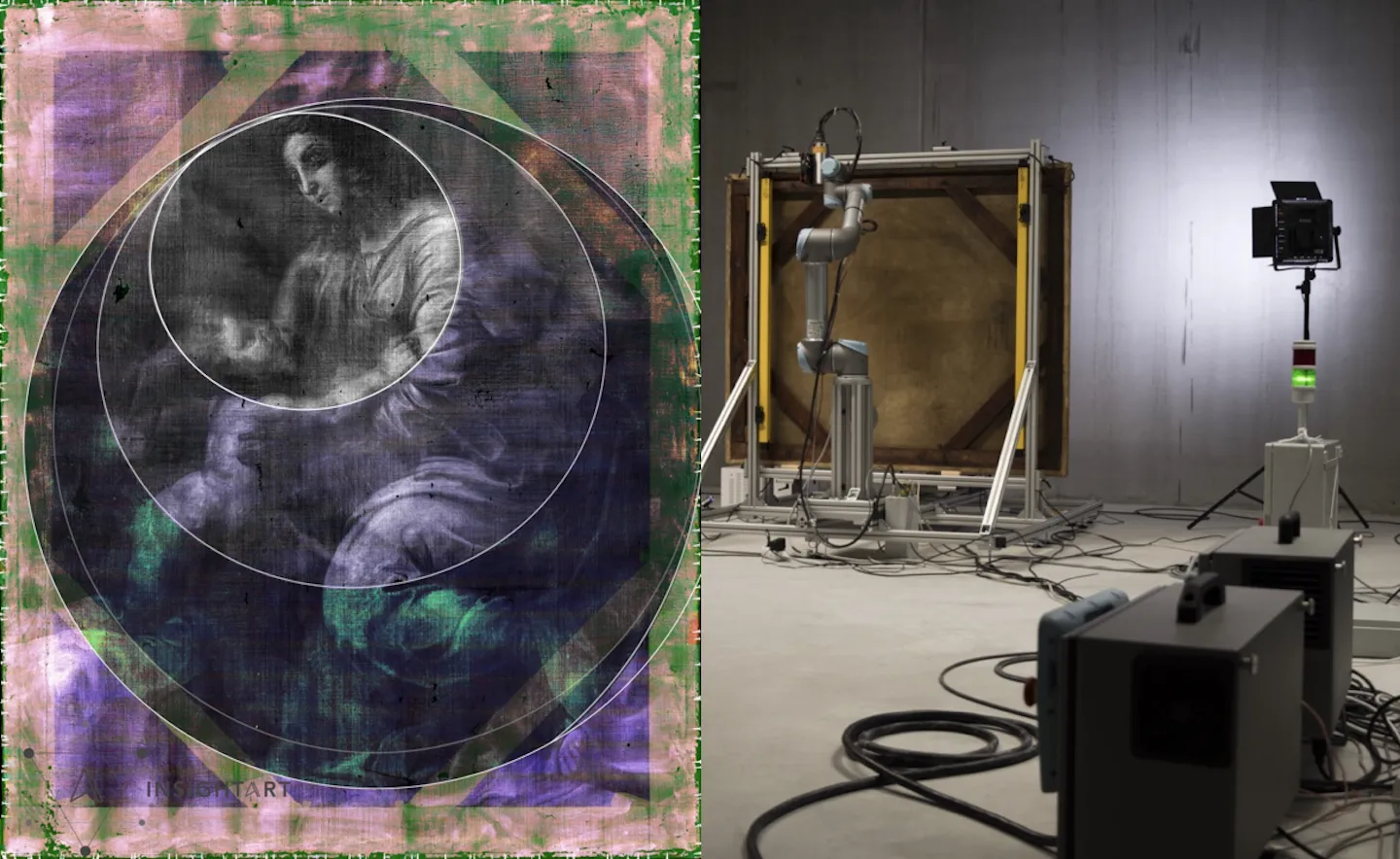
For a long time, it was thought that The Madonna and Child, a painting on canvas from a private collection, was not created directly by the master himself. Property of Popes and later part of Napoleon’s war treasure, the painting changed hands several times before arriving in Prague during the 1930’s. Due to its history and numerous inconclusive examinations, its authenticity was questioned for a long time. It has now been attributed to Raphael by a group of independent experts. One of the technologies that provided them with key information, was a robotic x-ray scanner using CERN-designed chips.
Behind this feat lies InsightART, a Czech start-up, and RToo, its state-of-the-art X-ray scanner. The scanner is composed of an X-ray source, Timepix photon detectors capable of taking spectroscopic X-ray images and a robotic platform. For three days, InsightART scanned the painting to obtain 11 very high-resolution images taken at different X-ray wavelengths. New high-resolution maps of the elemental composition of the paint were derived and these enabled the experts to get more precise information about the painting.
Much more flexible and modular than the standard, flat panel systems, RToo is capable of analysing large objects – the painting is 2m2 – as well as atypically shaped objects such as statues. According to physicist Josef Uher and CTO of InsightART, this type of imaging technology, specialised in artistic technological research, is set to become widespread in the future.
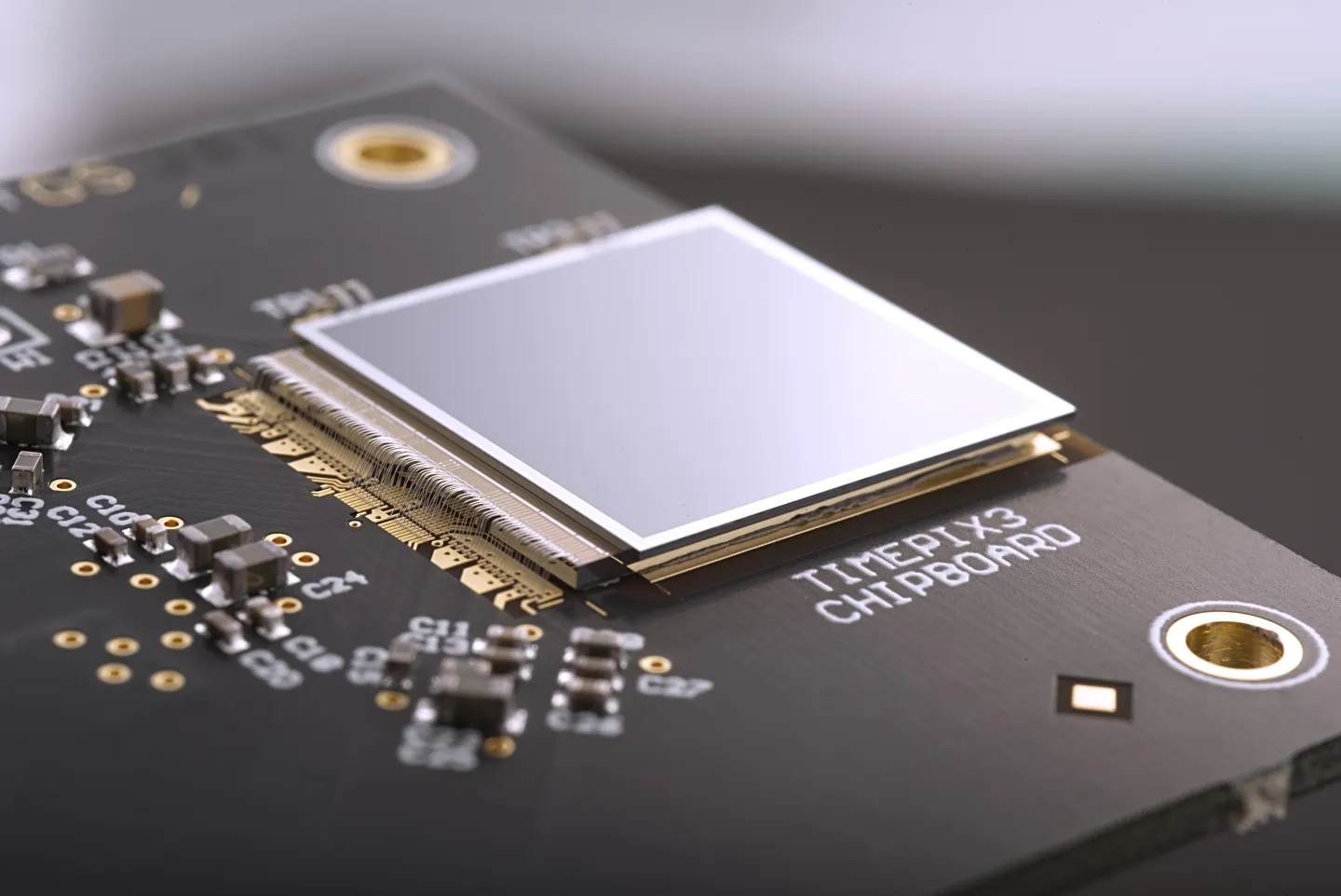
The Timepix3 chip is a multipurpose hybrid pixel detector developed within the Medipix3 Collaborations, having applications within medical imaging, education, space dosimetry and material analysis. (Image: CERN) (Image: CERN)
CERN’s Knowledge Transfer group has long experience in transferring the technology from which the Timepix photon detectors, based on the Medipix2 technology. These detectors are supplied under a licensing agreement between CERN (on behalf of Medipix2 Collaboration) and the Czech company ADVACAM s.r.o., InsightART’s parent company. In this respect, Aurélie Pezous, Knowledge Transfer Officer at CERN, stresses that: “High resolution spectroscopic radiography allows us to make great advances in the history of art. It is one more proof that CERN technologies have a wide range of applications.”
This joint achievement of physicists, restorers and art historians has taught us so much about the painting and widened horizons bringing a more thorough understanding of the master´s practice. For this reason, the team hopes to further deepen its knowledge by analysing the sibling painting of The Madonna and Child, called The Holy Family of Francis I, exhibited at the Louvre in Paris.

Also On Timepix
-
Specifications
Specifications
-
Outreach award for initiative to teach high-school physics with CERN detectors in Spain
Since their inception at CERN in the framework of the Medipix collaborations, the Medipix and Timepix families of chips have proved their worth in various technical and scientific fields, from medical imaging to astrophysics – Timepix chips are flying on the Artemis I mission this month. Yet, in parallel, these extremely compact and highly accurate…
-
Source: CERN (CDS) Timepix: from CERN’s galleries to the Moon
The renowned Timepix detector celebrates its 10-year anniversary on the International Space Station by flying to the Moon: the chip features in NASA’s future lunar programme BROKEN IMAGE NOT MOVED (drupal url : https://medipix.web.cern.ch//news/news/timepix/timepix-cerns-galleries-moon) In July 1969, just a few days after the first Moon landing, CERN’s then Director-General, Bernard Gregory, sent the following message…
-
Specifications
Specifications
-
Features and Applications
Features and Applications Features: Applications:
-
CERN technology helps rediscover lost painting by Raphael
CERN’s Timepix particle detectors, developed by the Medipix2 Collaboration, help unravel the secret of a long-lost painting by the great Renaissance master, Raphael 500 years ago, the Italian painter Raphael passed away, leaving behind him many works of art, paintings, frescoes and engravings. Like his contemporaries Michelangelo and Leonardo da Vinci, Raphael’s work made the…
-
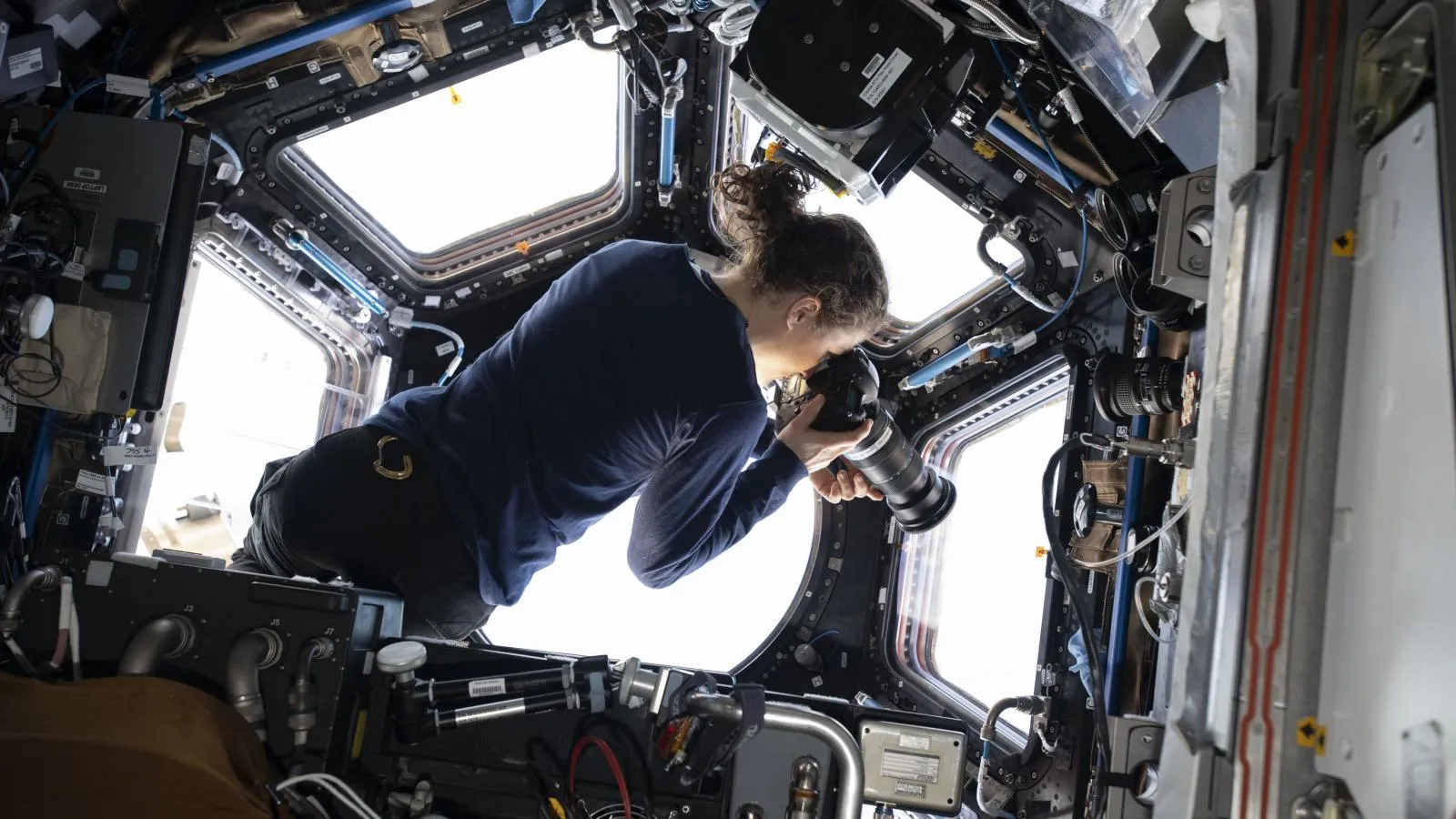
NASA, CERN Timepix Technology Advances Miniaturized Radiation Detection
As we prepare to send the first woman and next man to the Moon and on to Mars, NASA, with support from the University of Houston, has been working to develop advanced radiation detectors to better protect astronauts and vital spacecraft systems. As we prepare to send the first woman and next man to the…
-
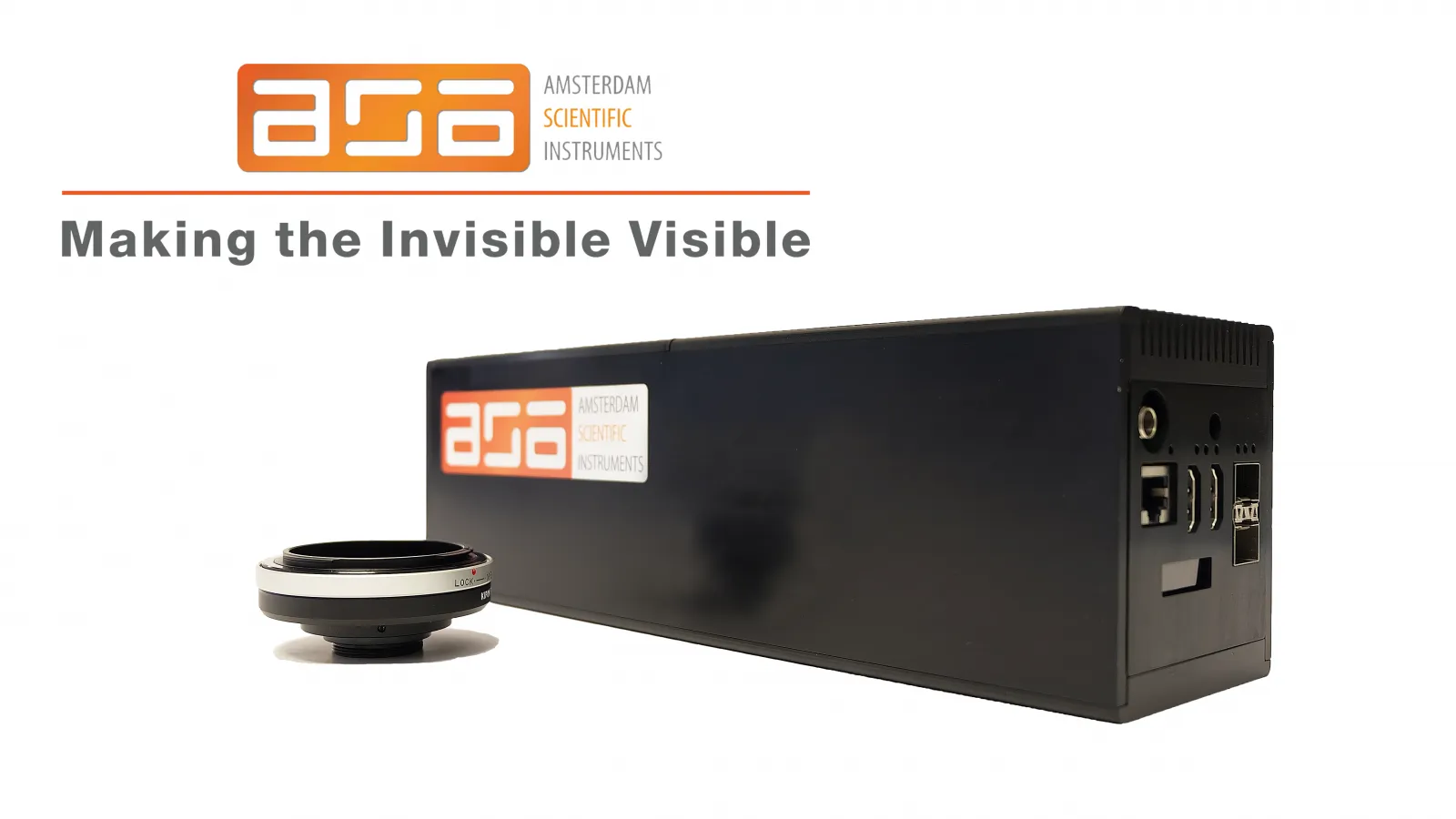
Amsterdam Scientific Instruments (ASI): Timepix3 licence
Amsterdam Scientific Instruments (ASI) has acquired a license from CERN for the TIMEPIX3 technology, a core component for ASI’s next generation hybrid pixel cameras. Amsterdam Scientific Instruments (ASI) has acquired a license from CERN for the TIMEPIX3 technology, a core component for ASI’s next generation hybrid pixel cameras. With the newly obtained license the company…
-
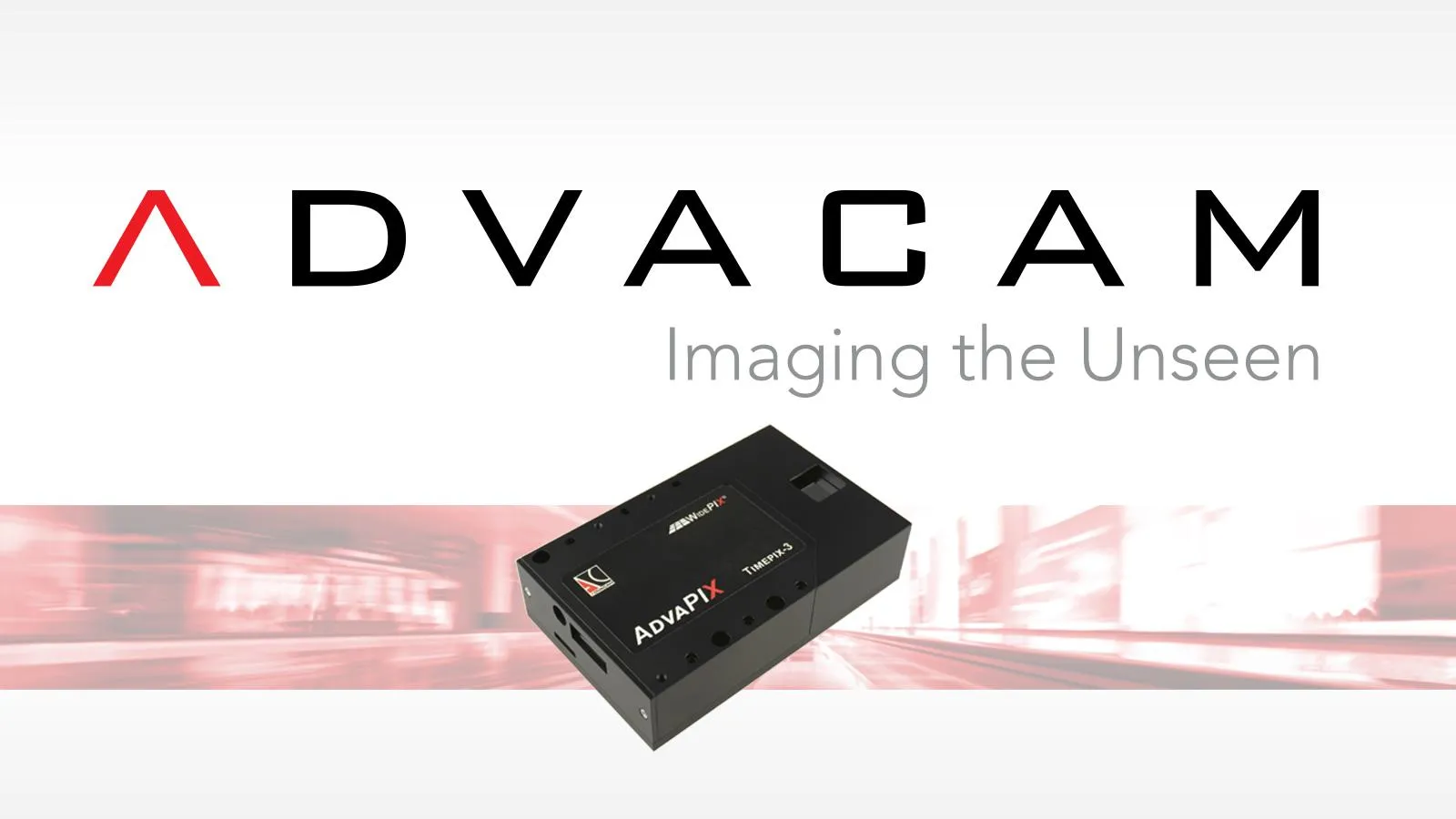
ADVACAM: Timepix3 licence
CERN as an authorized licensor of Medipix3 collaboration and ADVACAM s.r.o. have signed a Timepix3 license agreement. Timepix3 chip (TPX3) is the next generation of X-ray and radiation imaging technology. CERN as an authorized licensor of Medipix3 collaboration and ADVACAM s.r.o. have signed a Timepix3 license agreement. Timepix3 chip (TPX3) is the next generation of…
-

Schoolboy uses grid computing to analyse satellite data
At just 16, Cal Hewitt, a student at Simon Langton Grammar School for Boys in the United Kingdom became the youngest person to receive grid certification – giving him access to huge grid-computing resources. At just 16, Cal Hewitt, a student at Simon Langton Grammar School for Boys in the United Kingdom became the youngest…
