
What does CERN have to do with 3D colour x-rays and 19th century paintings?
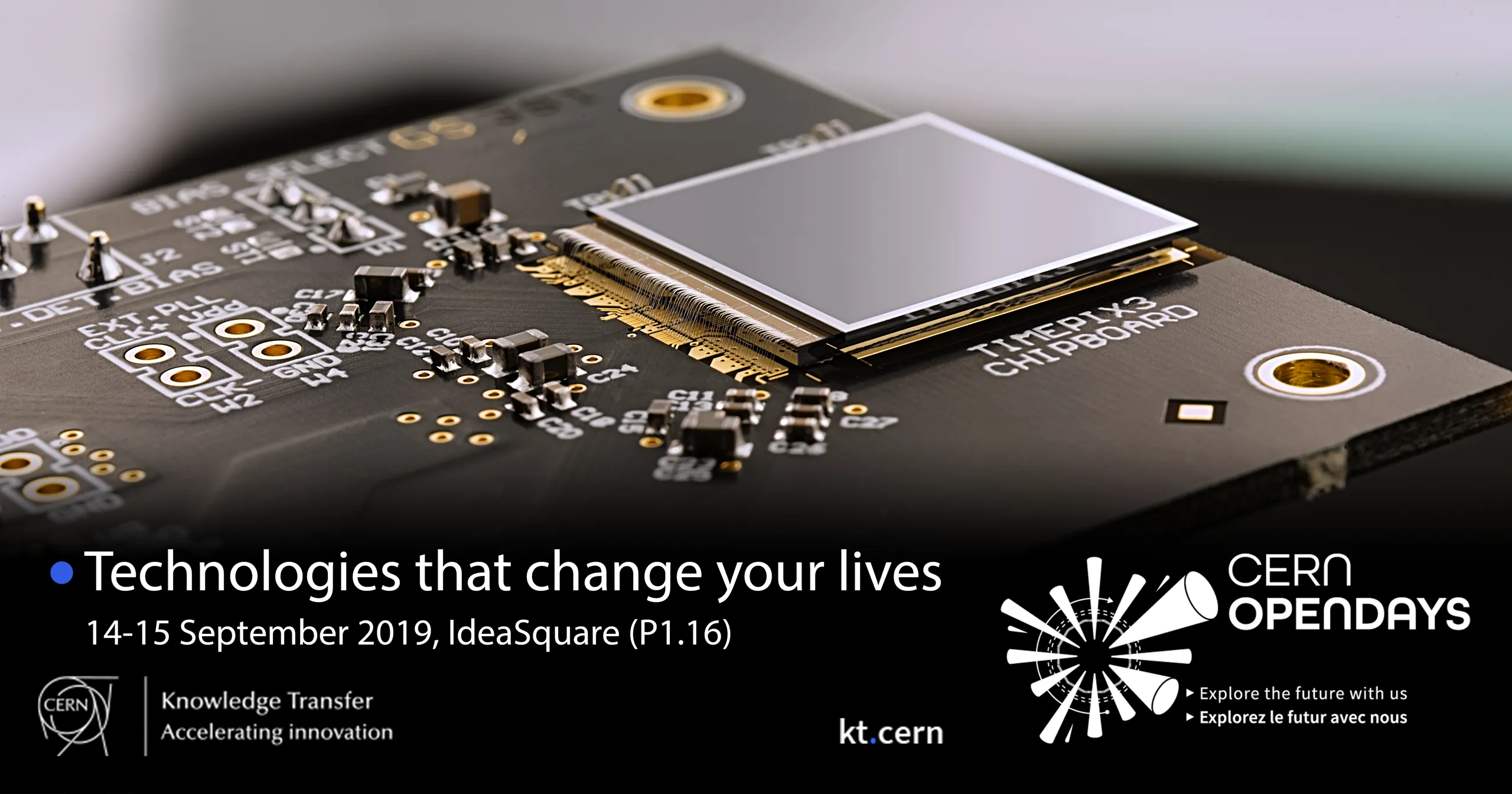
What does CERN have to do with 3D colour x-rays and 19th century paintings? Join experts from the CERN Knowledge Transfer Group on 14-15 September at the CERN Open Days, and learn more about the real-life applications of CERN’s highly advanced technology and scientific instruments!
Scientists use them to answer some of the most fundamental questions of the universe: what are we made of? Why do particles have mass? But some of these futuristic technologies can also be used to develop techniques with a more direct impact on our lives, since they have applications well beyond particle physics. Today, we can use accelerators for art analysis, and detectors for medical diagnosis, and we can explore the challenges shared by particle-physics facilities and outer space missions.
Under the banner “Explore the future with us”, the CERN Knowledge Transfer Group has organised an exhibition at IdeaSquare (P1.16 – ATLAS), where visitors can explore the medical and aerospace applications of CERN’s technology. Visitors can see a real-life compact particle accelerator used for art analysis, as well as the Medipix detector system that allows 3D colour X-rays.
On CERN’s main site, CERN Knowledge Transfer experts will participate in a series of talks at the Auditorium, on the topic of innovation at international organisations (Sunday, 15 September 10.30am) and medical applications (Sunday, 15 September 2pm), as well as a series of short talks in Room C (61/1-009) throughout the entire weekend. The short-talk programme is organised by the Knowledge Transfer Group to allow visitors to ask all their questions about the impact of CERN’s technology on their lives.
Entrance to the nine Open Days visit sites will be free and open to everyone, including the visit point “Technologies that change your lives” (Point 1.16 – ATLAS), and visitors should register. The main space at IdeaSquare is adapted to reduced mobility, pregnant women, and supervised children. Food and beverage is strictly forbidden around in the exhibition, due to the proximity to different accelerator and detector components.
The CERN Open Days take place during the second long shutdown of the Large Hadron Collider (LHC), providing a unique opportunity to discover the major upgrade work that is currently being carried out at CERN in preparation for the LHC restart in 2021. This work aims to improve the LHC’s performance and prepare for the arrival of the High-Luminosity LHC (HL-LHC), which is planned for 2026.
Also On Events
-
CERN Open Days: Technologies that change your lives
What does CERN have to do with 3D colour x-rays and 19th century paintings? What does CERN have to do with 3D colour x-rays and 19th century paintings? Join experts from the CERN Knowledge Transfer Group on 14-15 September at the CERN Open Days, and learn more about the real-life applications of CERN’s highly advanced…
-
20th Anniversary Symposium on Medipix and Timepix
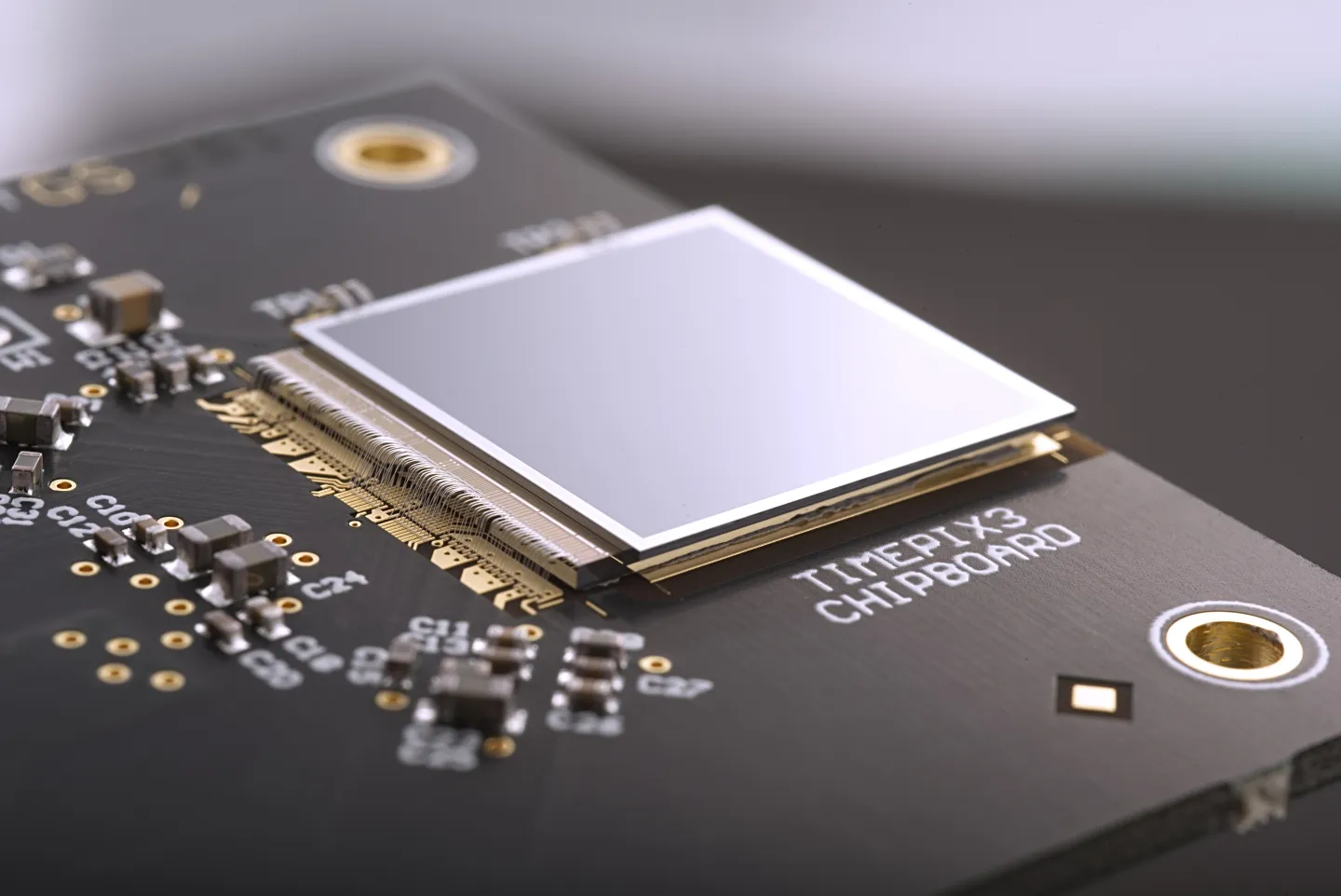
The Medipix2 Collaboration will celebrate 20 years of activity in 2019. To mark the occasion, a special symposium on Medipix and Timepix will be held at CERN on 18 September. The Medipix2 Collaboration will celebrate 20 years of activity in 2019. To mark the occasion, a special symposium on Medipix and Timepix will be held…
-
More bang from your beam: reimagining X-ray conversion
The X-rays used for radiation therapy, medical imaging and many other applications are produced by slamming an electron beam into a piece of metal. The X-rays used for radiation therapy, medical imaging and many other applications are produced by slamming an electron beam into a piece of metal. Most of the energy from the beam…
-
From CERN to the clinic
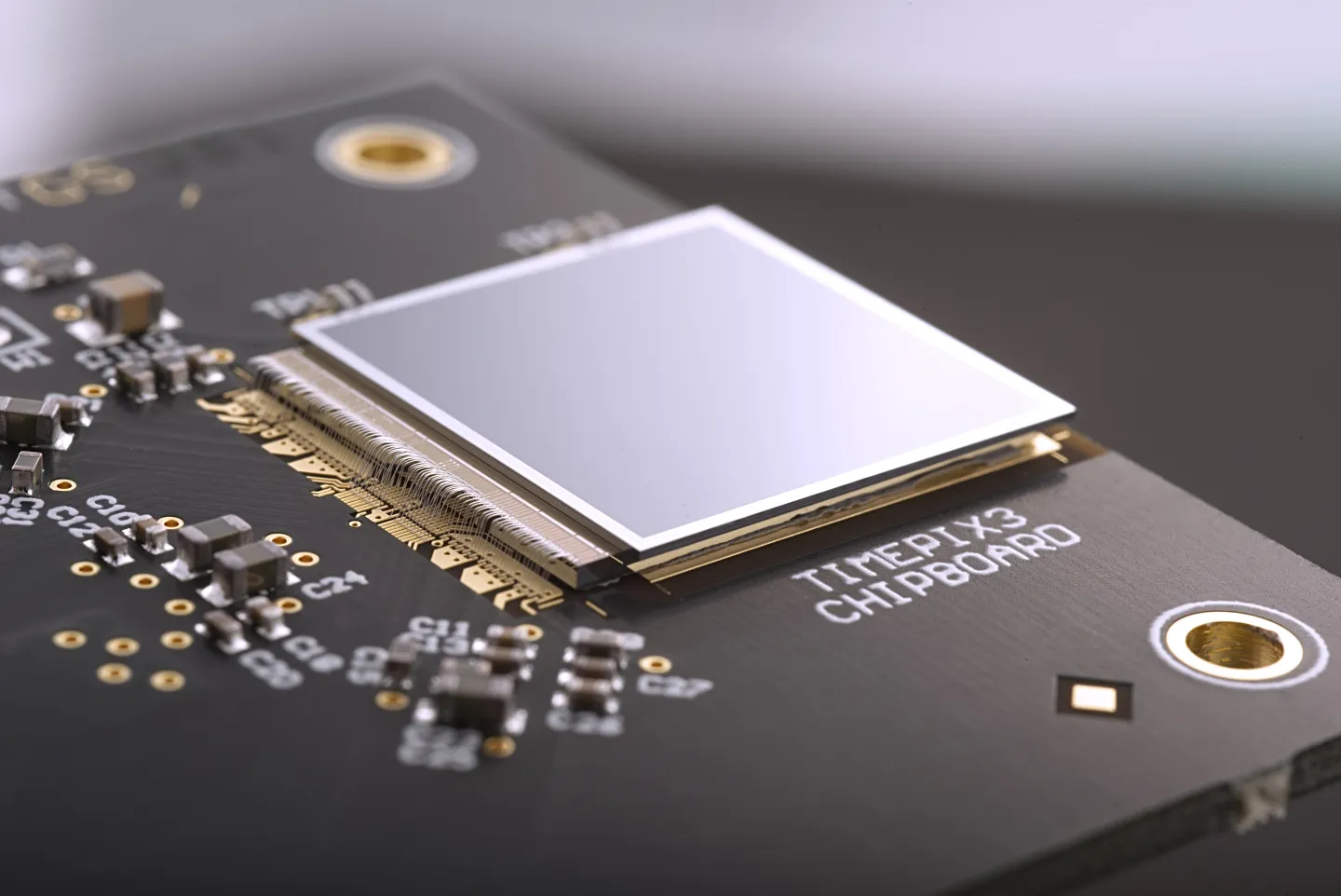
At a seminar at CERN today, Ron Heeren describes how CERN’s Timepix read-out chip might in the future be found in surgery rooms. Medipix – a family of read-out chips for particle imaging and detection developed at CERN – has proved its credentials outside the field of high-energy physics, including in art authentication and restoration.…