
The ADMIRA project uses Timepix-based detectors to help students experiment with particle physics and contributes to transforming STEM education.
Combustion, diffraction, magnetism… Many natural phenomena can be observed, experimented with and studied at school. Some have traditionally been difficult to demonstrate and have had to rely on theory only. Particle physics is one such subject whose abstraction makes that most students have to believe the concepts explained by their teacher without being able to physically experiment with them.
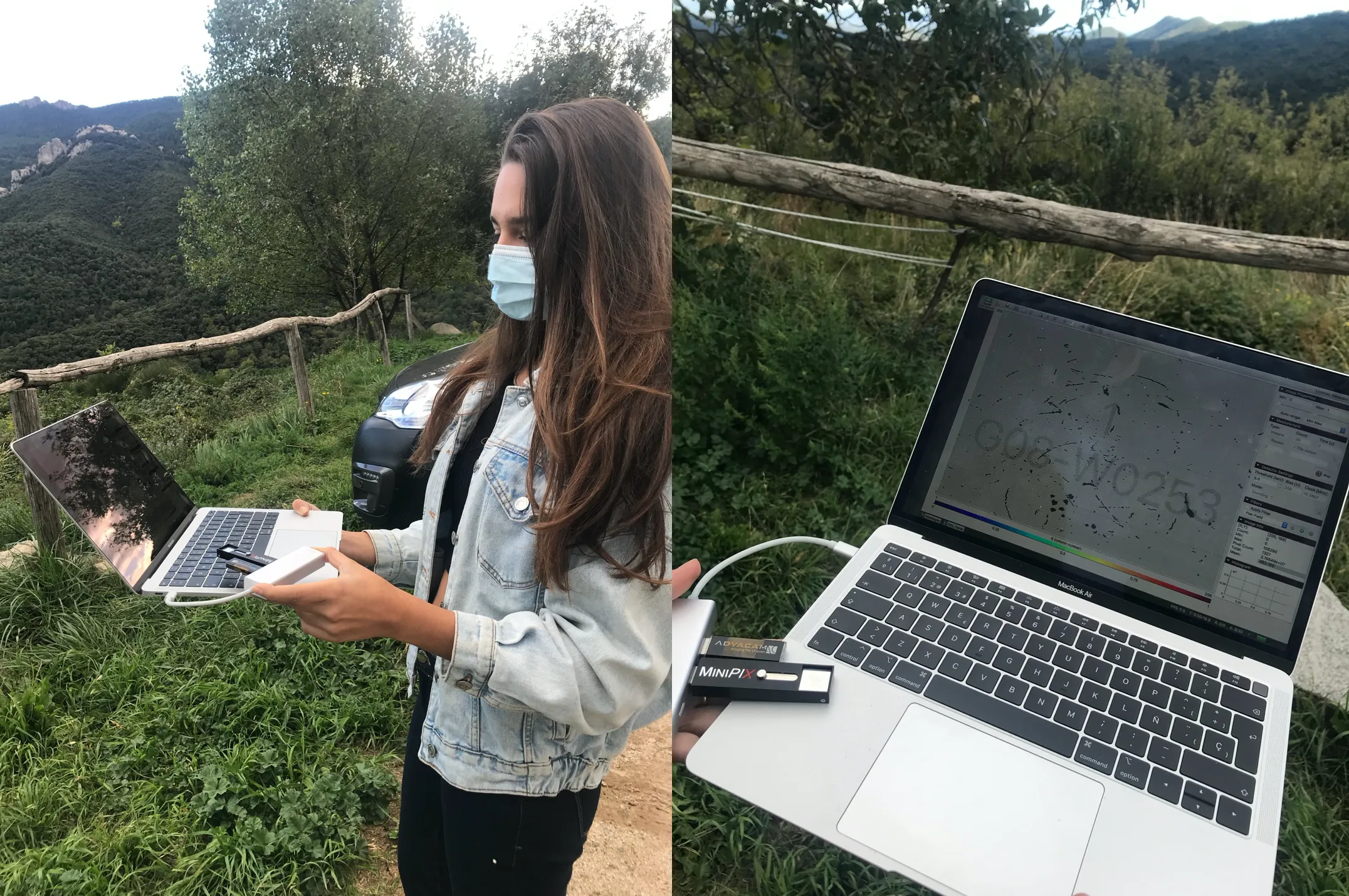
The next generation of students may be able to experience the wonders of particle physics thanks to the development of detector technology. The Barcelona-set ADMIRA project uses Timepix-based hybrid pixel detectors to help physics teachers and their students “visualise” particles and determine their nature. Indeed, just like animals can be recognised by their characteristic footprint, different particles can be identified by the energy traces they leave when interacting with detector material.
Developed in the framework of the Medipix2 collaboration, these detector chips, originally used for high-energy physics, are able to accurately measure the signals deposited by a particle in a pixelated, silicon sensor. They are based on a matrix of microscopic semiconductor sensor elements, each of which is connected to its own readout electronics channel, and whose final form is a very handy USB stick capable of running on any PC.
The idea of using this detector technology for secondary education was brought by the ADMIRA (Activitats amb Detectors Medipix per Investigar la Radiacio a l’Aula) project with the support of the Institut de Ciències del Cosmos of the University of Barcelona (ICCUB), and takes inspiration from other educational projects using Timepix. The project selected a group of schools from the region of Barcelona, including the school of one of the designers of the Medipix/Timepix family of chips, to share and experiment with two Minipix detectors.
Together with the participants of the project, we strongly believe that Timepix can be a tool that can contribute to transforming STEM education. We hope that by giving students the opportunity to work on real science, we will create a vocation for the field.
– D. Parcerisas, Sagrada Família School Gavà.
Students have been able to experiment with the detectors and identify, by themselves, the universe of particles surrounding them. The range of experiments includes the analysis of background radiation, the identification of specific particles, the study of cosmic rays or the demonstration of the attenuation of particles passing through different materials. The list of projects is available here.
The detectors used by the ADMIRA project are supplied under a licensing agreement between CERN (on behalf of Medipix2 Collaboration) and the Czech company ADVACAM s.r.o.. If you are interested in gaining access to the hybrid pixel detector technology on which the Timepix photon detectors are based, please contact CERN’s Knowledge Transfer group.
Also On Medipix3
-
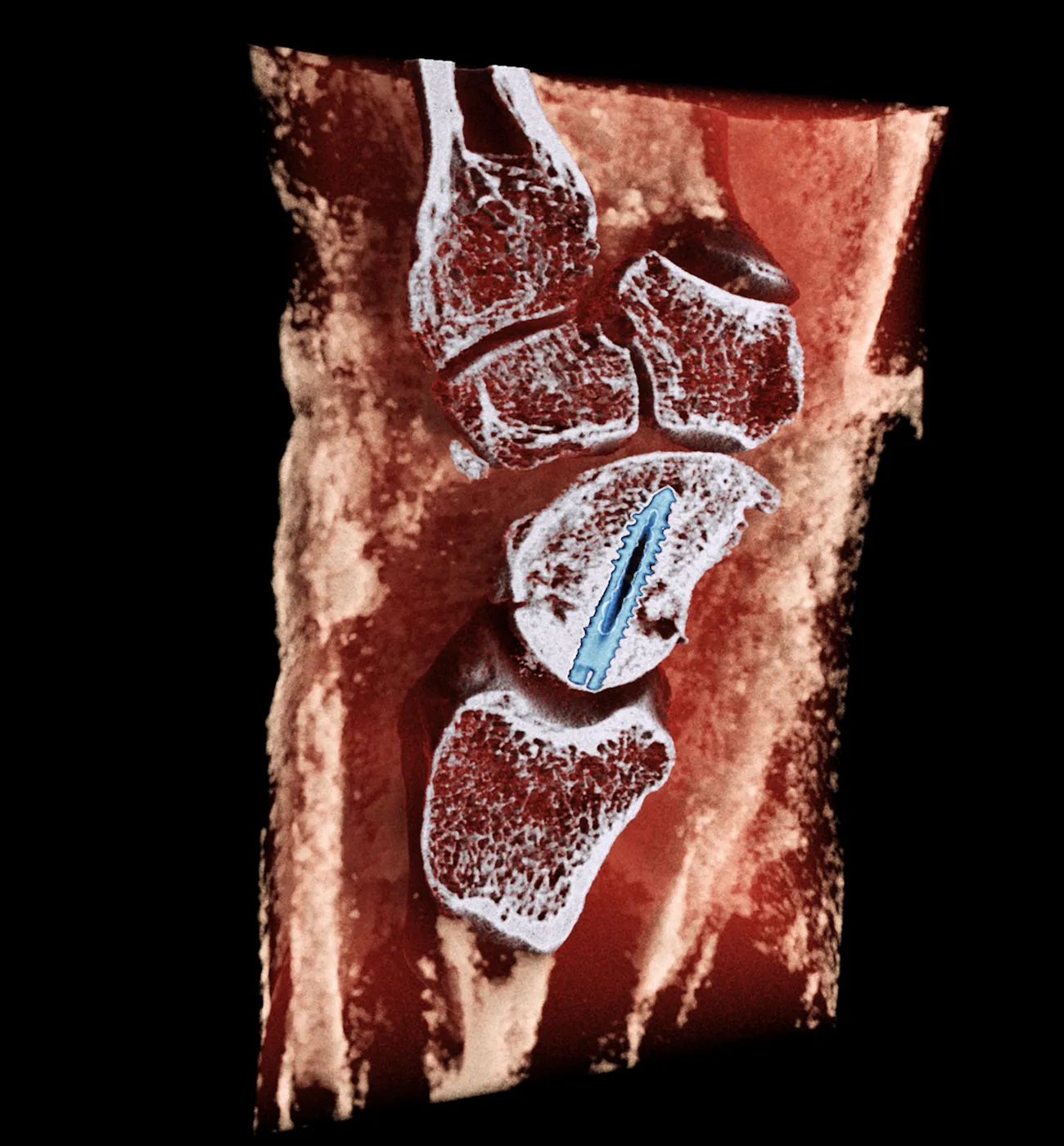
MARS Bioimaging partners with the Hospital for Special Surgery (HSS)
The partnership will assess particular aspects of the MARS 5×120 Extremity scanner. Read the original press release on the HSS website or our partner MBI’s website. Hospital for Special Surgery (HSS), the world’s leading academic medical center specialized in musculoskeletal health, and New Zealand-based medical device and technology company MARS Bioimaging Limited (MARS) today announced…
-
Source: CERN (CDS) Spectroscopic X-ray imaging now certified for medical use
The CERN Workshops on Medical Applications of Spectroscopic X-ray Detectors have been instrumental in advancing spectroscopic X-ray imaging and bringing it from the lab to the clinic BROKEN IMAGE NOT MOVED (drupal url : https://medipix.web.cern.ch//news/news/medipix3/spectroscopic-x-ray-imaging-now-certified-medical-use) The sixth Workshop on Medical Applications of Spectroscopic X-ray Detectors is currently taking place at CERN. Launched in 2011 and…
-
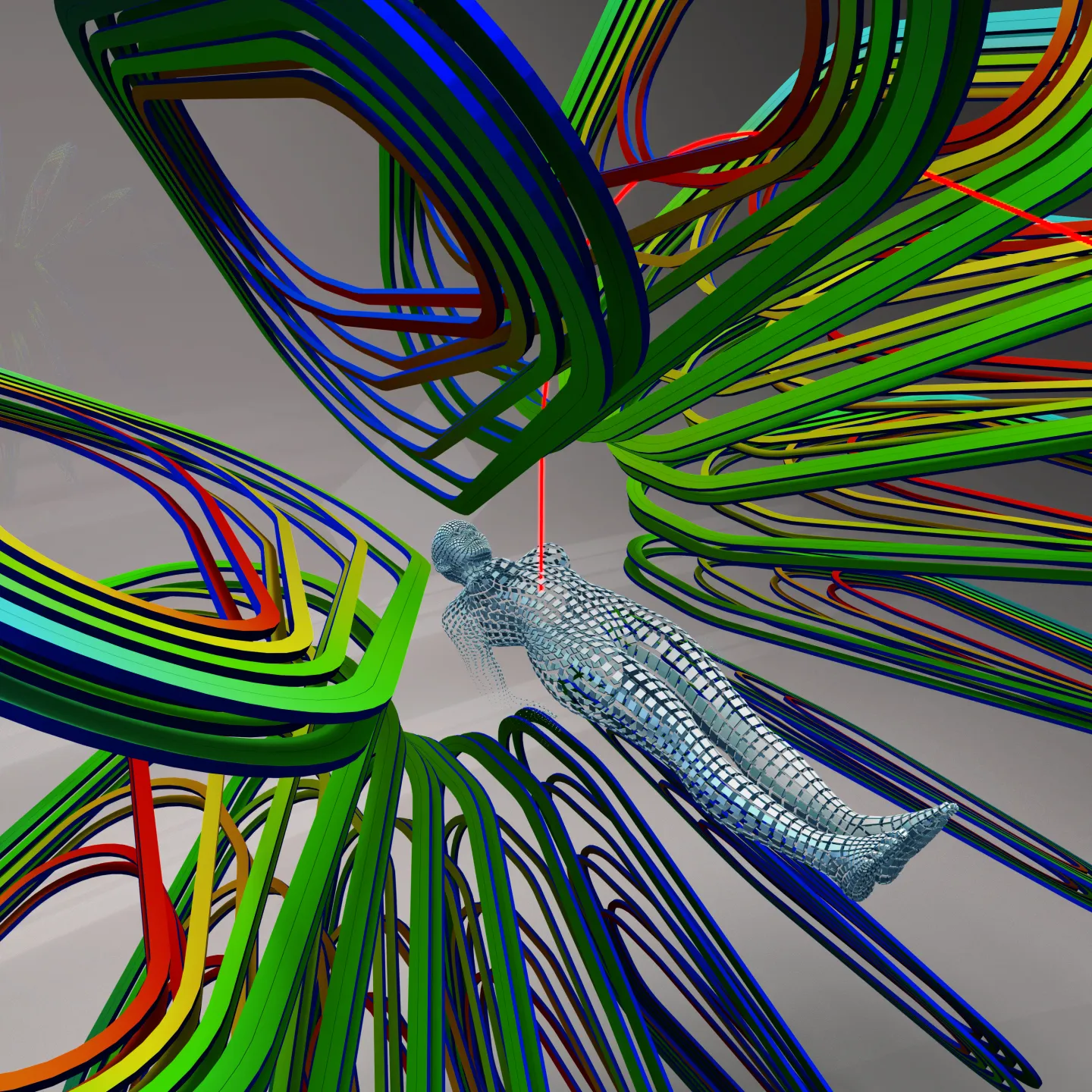
CERN’s impact on medical technology
Frontier instruments like the LHC and its detectors not only push back the boundaries of our knowledge, but also catalyse innovative technology for medical applications, writes Manuela Cirilli. This article was originally published in the July/August edition of CERN Courier magazine. Today, the tools of experimental particle physics are ubiquitous in hospitals and biomedical research.…
-
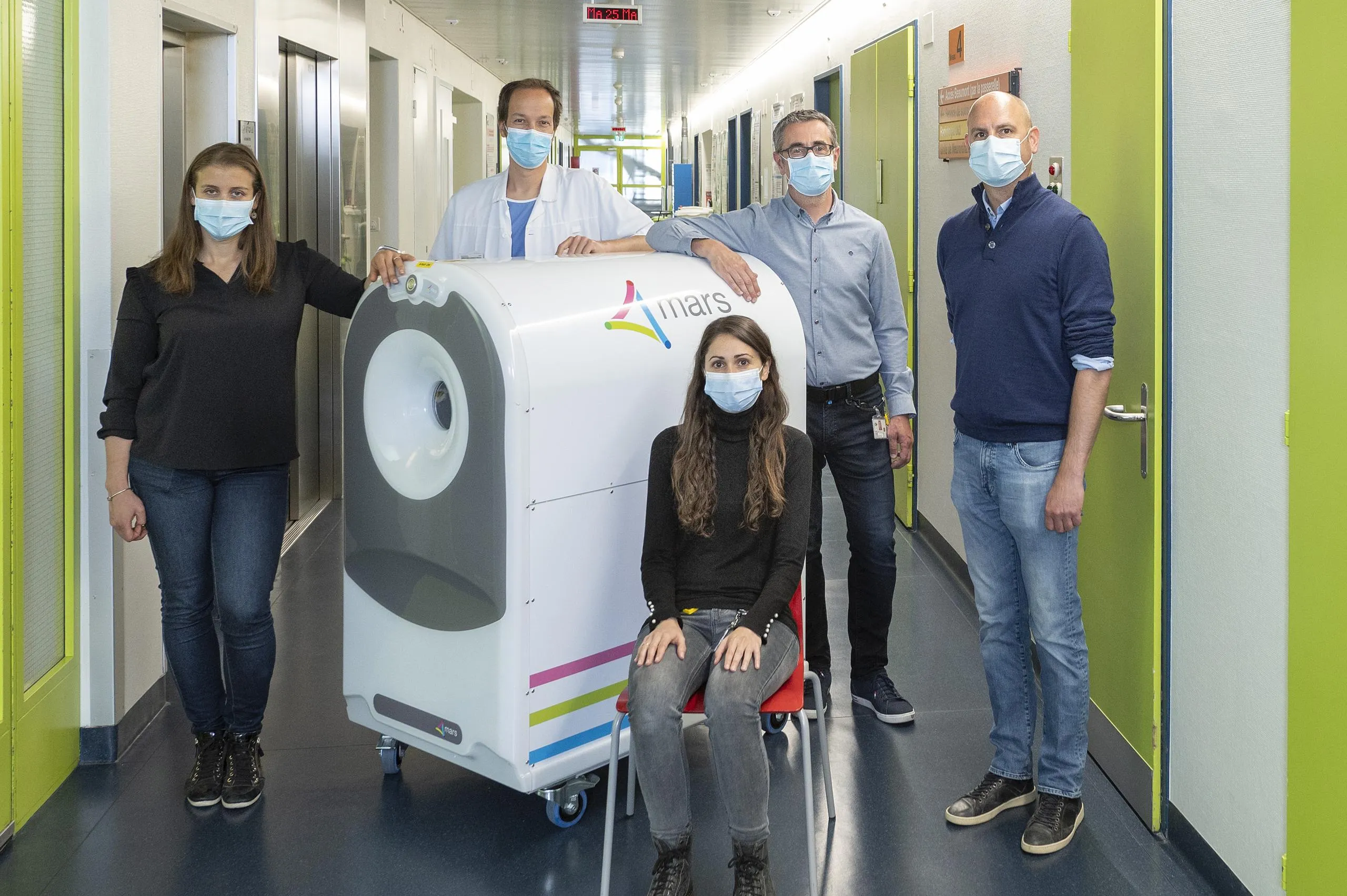
First European hospital receives 3D colour X-ray scanner using CERN technology
MARS Bioimaging’s 3D colour X-ray scanner has arrived in Europe to undertake clinical trials that will lead to its medical use. After years of development in New Zealand, MARS Bioimaging’s 3D colour X-ray scanner has arrived in Europe, at Lausanne University Hospital (CHUV) in Switzerland. This event marks the first step towards the European part…
-
Specifications
Specifications
-
Features & Applications
Features & Applications Features: Applications:
-
Timepix-based detectors bring particle physics in the classroom
The ADMIRA project uses Timepix-based detectors to help students experiment with particle physics and contributes to transforming STEM education. Combustion, diffraction, magnetism… Many natural phenomena can be observed, experimented with and studied at school. Some have traditionally been difficult to demonstrate and have had to rely on theory only. Particle physics is one such subject…
