
Physics teacher Becky Parker of the Physics Simon Langton Grammar School in the UK keeps particle detectors in her classroom.
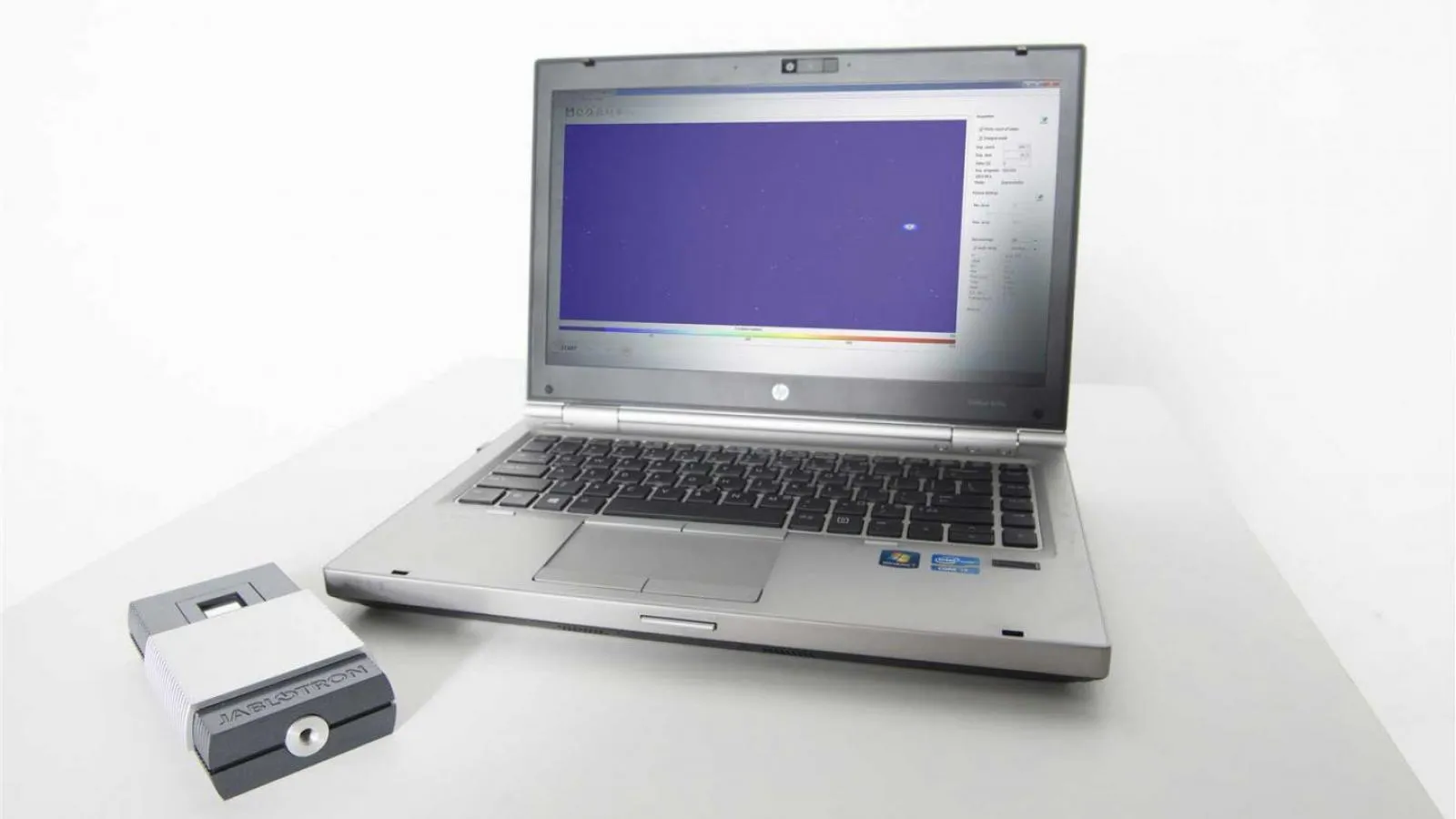
Physics teacher Becky Parker of the Physics Simon Langton Grammar School in the UK keeps particle detectors in her classroom. For years, her students have been using Medipix detector – silicon-pixel particle detectors that fit on a chip – to perform real physics experiments and find out what scientific research is all about.
CERN engineer Michael Campbell used his knowledge of particle detectors to design the hybrid pixel detector for medical use. He now leads several collaborations that continue research and development on the chips.Now the Czech company JABLOTRON is using Medipix technology to produce and sell an educational toolkit they call MX-10. The toolkit consists of an easy-to-use particle detector that can display ionizing radiation in real time.
“MX-10 is the result of a long collaboration between CERN, JABLOTRON and the Institute of Experimental and Applied Physics at the Czech Technical University (CTU) in Prague, a member of the Medipix 3 collaboration,” says Giovanni Anelli, head of the Knowledge Transfer group. “At the beginning of the product development, CERN granted to JABLOTRON a license to allow them carrying out research and development on the technology, and CERN and CTU provided technical support throughout the development phase.”
CERN recently adopted MX-10 as part its new CERN SchoolLab. “Our new educational lab features a series of hands-on experiments, providing a new opportunity for school students and teachers coming to CERN to carry out experiments on modern physics and related technological areas” says Rolf Landua, head of Education and Outreach at CERN. “We included MX-10 because the Medipix technology offers a wide range of possible uses. In stand-alone mode, it can detect, measure and characterize radiation from cosmic rays, rocks or radioactive sources. Together with three new X-ray sources, the superb resolution of the Medipix chip can be demonstrated,” he says.
CERN will introduce students and teachers to the use of MX-10, and will provide feedback to the company to further improve the product.
Originally published at the CERN website.
Also On Medipix
-

Specifications
Specifications
-
Features and Applications
Features and Applications Features: Applications:
-
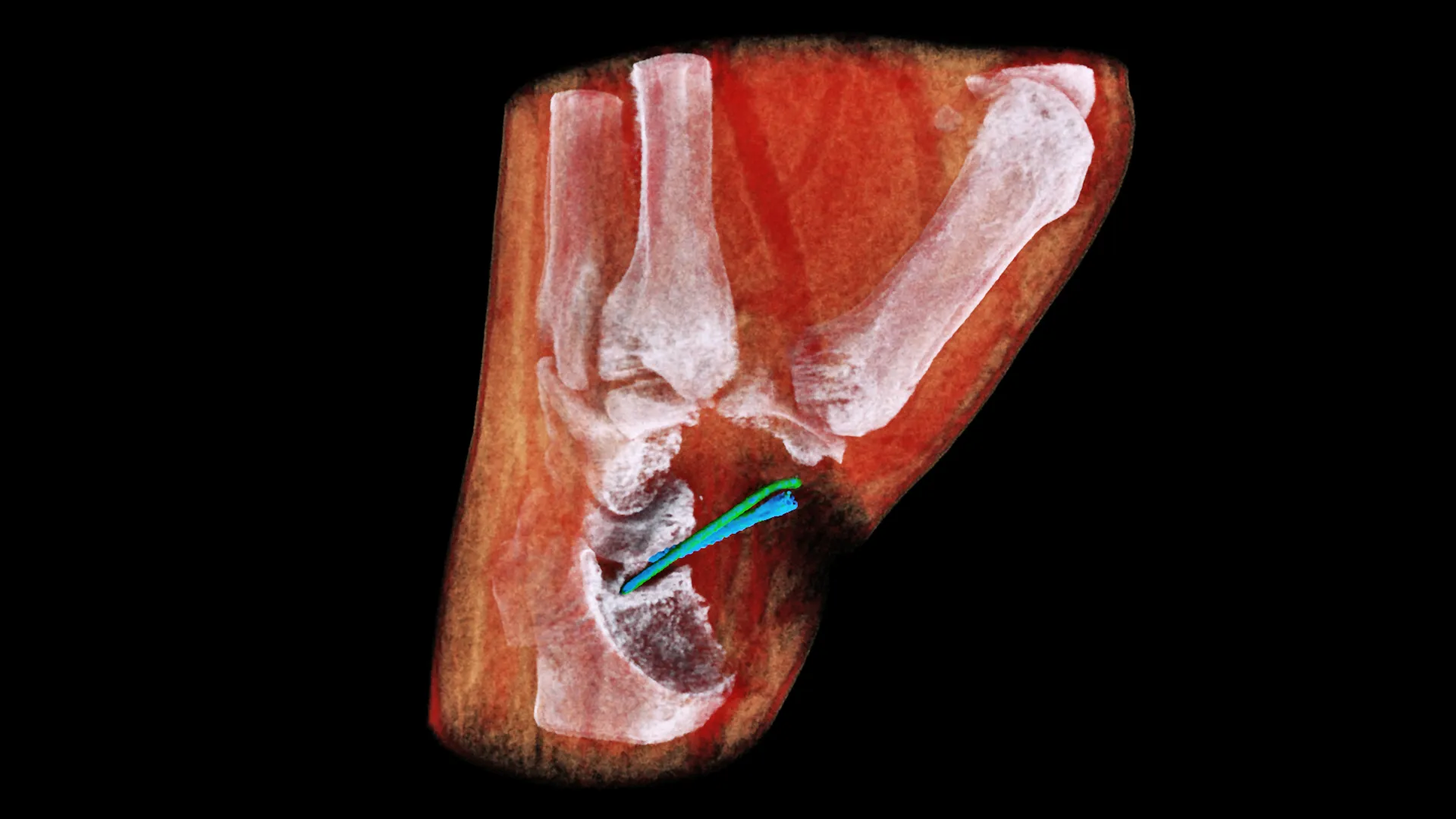
New 3D colour X-rays made possible with CERN technology
Stunning new images pave the way to large-scale human trials, two years on from the first ever 3D colour human X-ray using CERN Medipix3 technology Two years after the first ever 3D colour X-ray of a living human, MARS Bioimaging have released stunning new images made using a world-first compact scanner, based on Medipix3 technology…
-
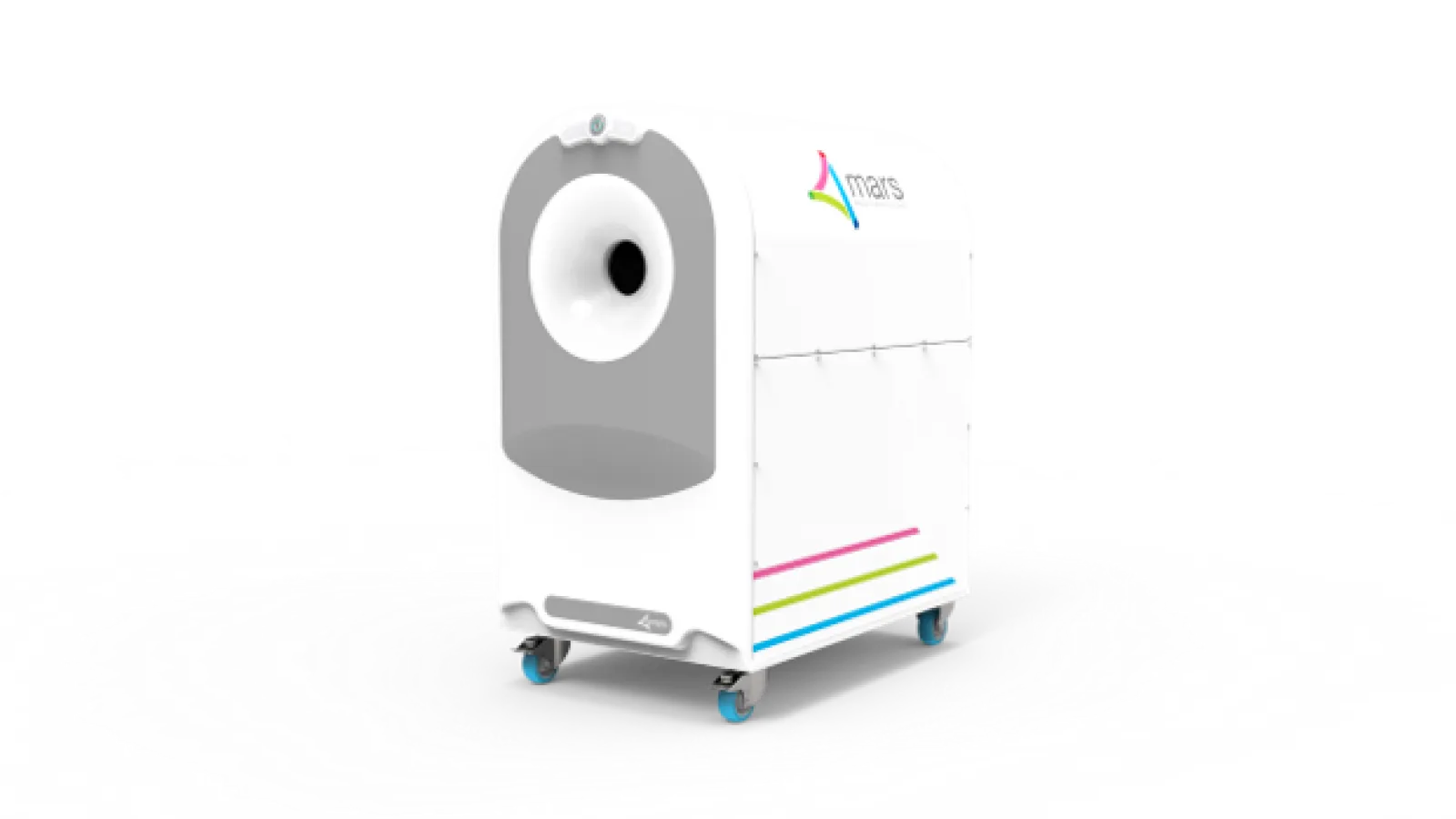
MARS Bioimaging is seeking partners to better enable drug development and therapy monitoring for COVID-19
The current standard for definitive diagnosis of COVID-19 is the real-time reverse transcriptase-polymerase chain reaction (RT-PCR). Background The current standard for definitive diagnosis of COVID-19 is the real-time reverse transcriptase-polymerase chain reaction (RT-PCR). While this is a highly sensitive and specific test for COVID-19, it does not measure the severity nor progress of the associated…
-
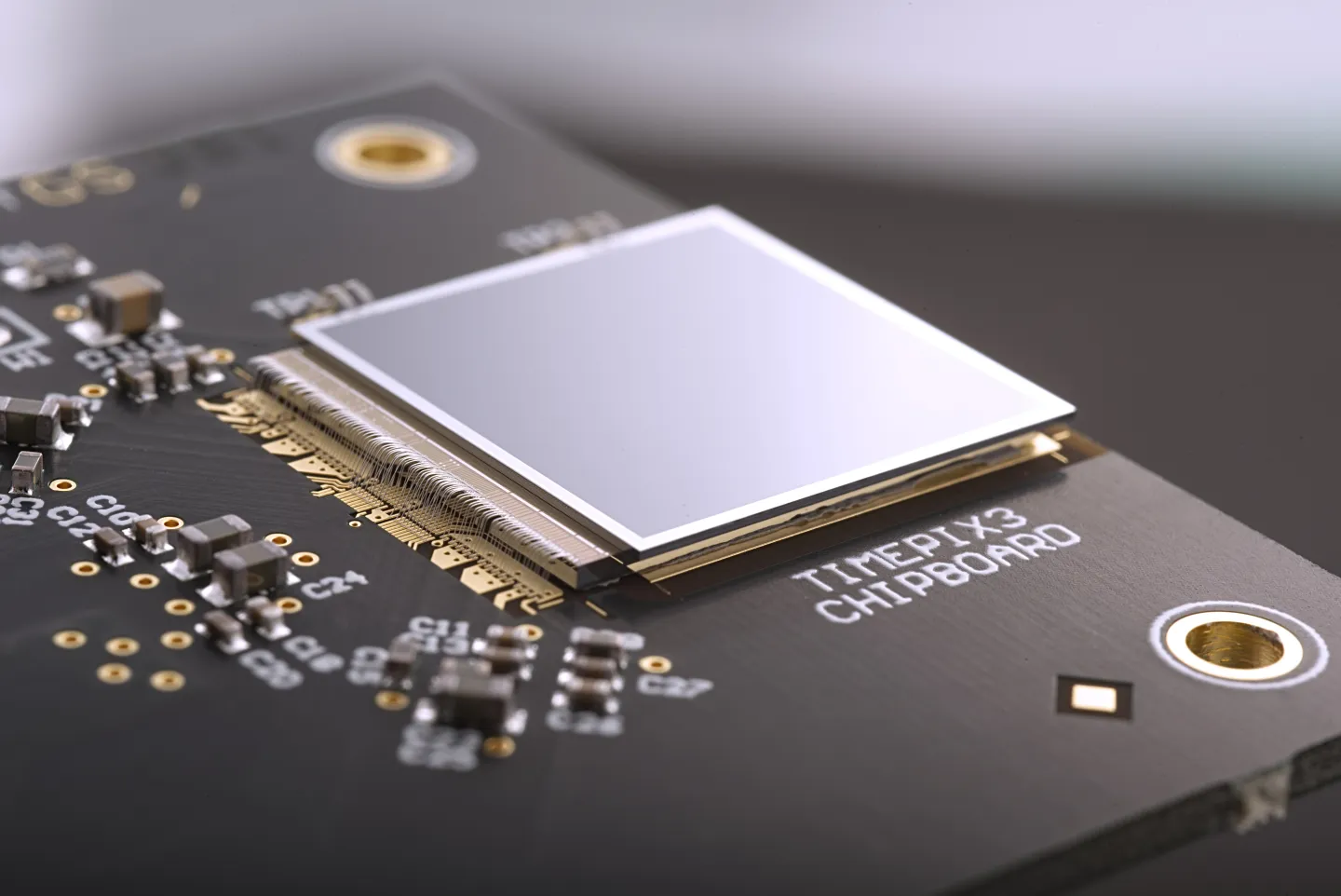
Medipix: Two decades of turning technology into applications
The story of how detector components ended up in medical imaging, in art restoration and even in space. How could microchips developed for detectors at the Large Hadron Collider (LHC) be used beyond high-energy physics? This was a question that led to the Medipix and Timepix families of pixel-sensor chips. Researchers saw many possible applications…
-
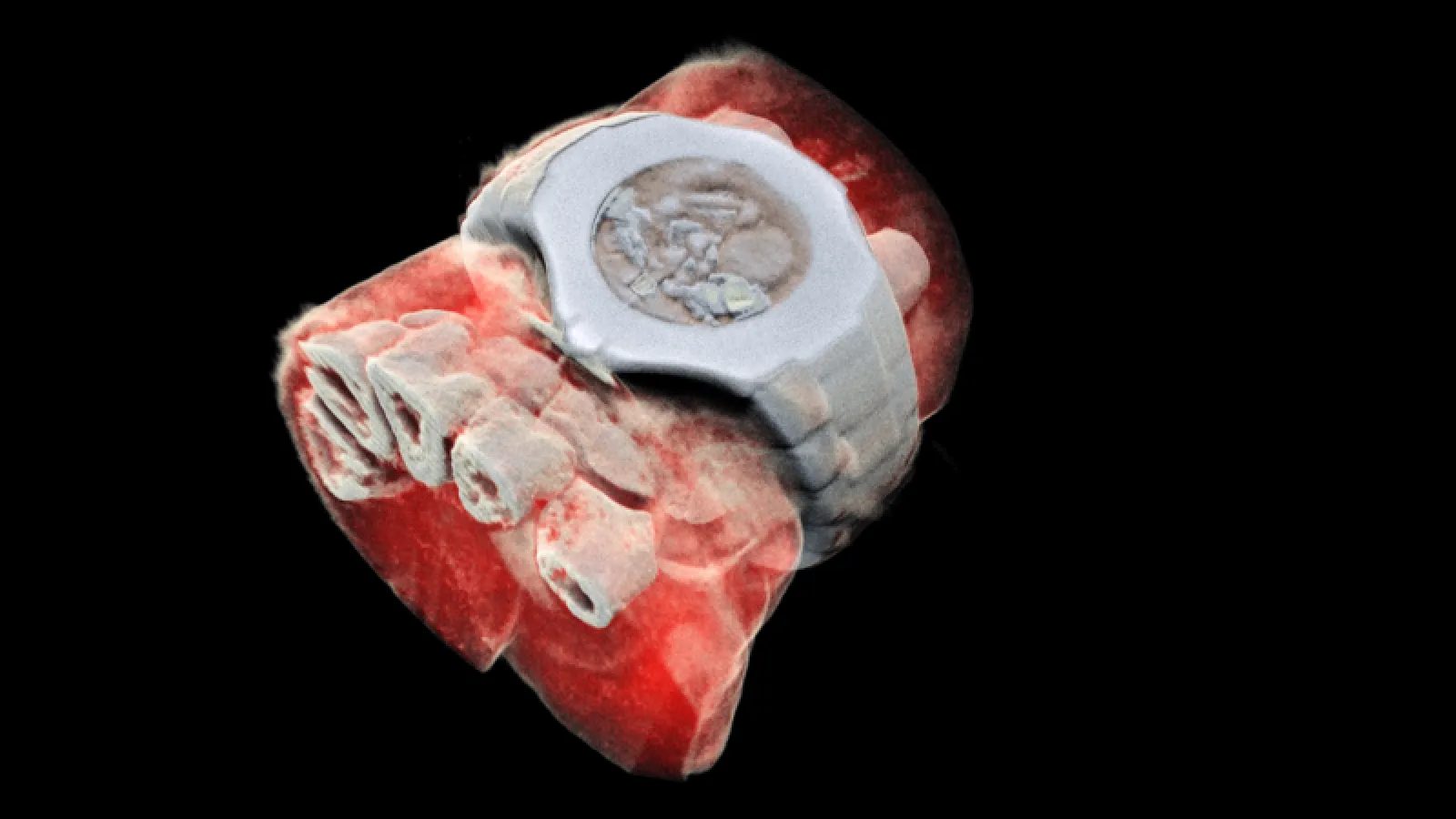
First 3D colour X-ray of a human using CERN technology
First human scanned with next–generation 3D colour scanner using CERN technology What if, instead of a black and white X-ray picture, a doctor of a cancer patient had access to colour images identifying the tissues being scanned? This colour X-ray imaging technique could produce clearer and more accurate pictures and help doctors give their patients…
-
How to spot a perfect fake: the world’s top art forgery detective
BBC on Fake Art – InsightART in the report! BBC on Fake Art – InsightART in the report! In: BBC News, May 12th Also On Medipix
-
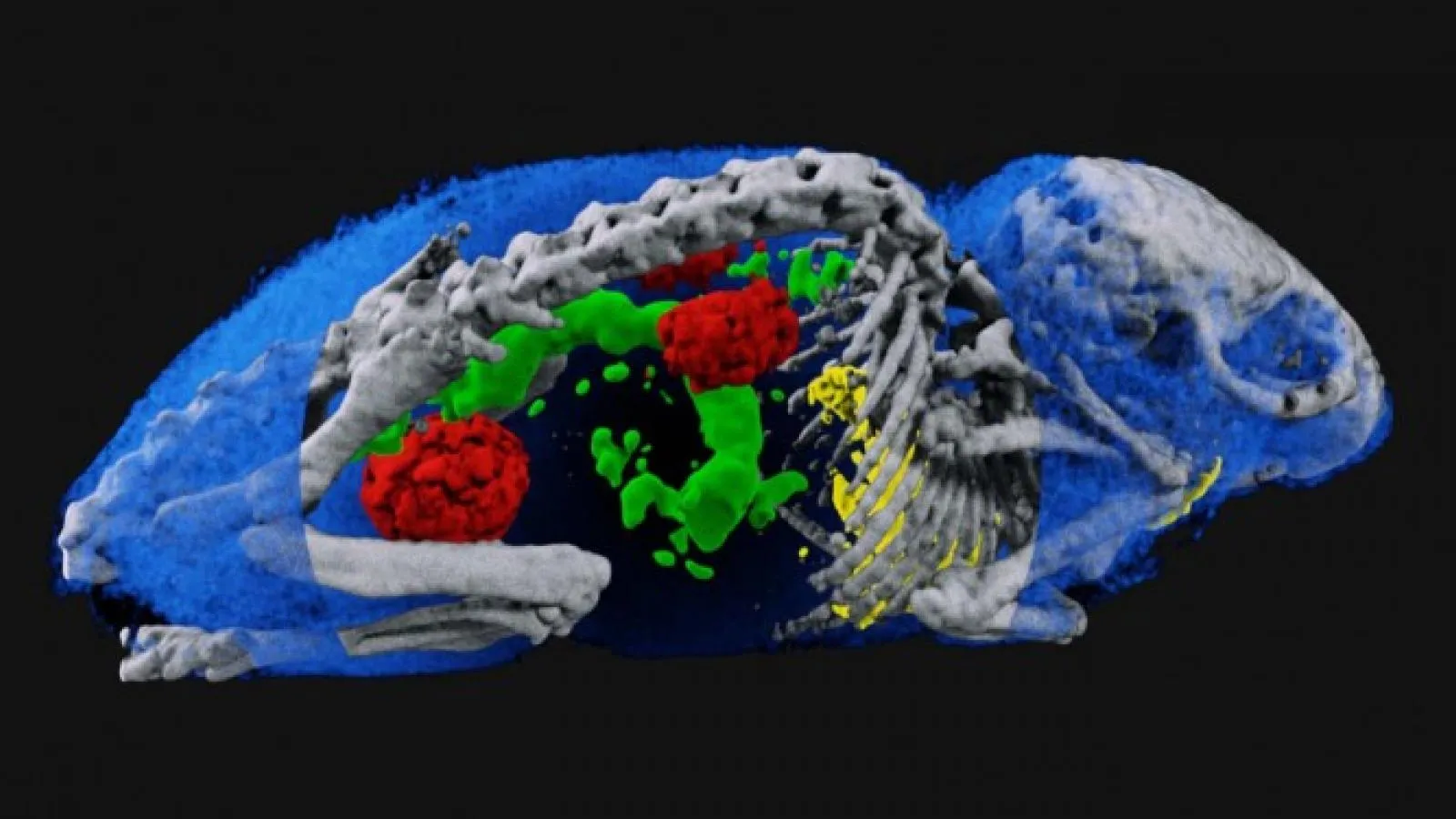
Spectral imaging: from CERN to medical technologies
Ever since Röntgen discovered x-rays in 1895, physics and medicine have gone hand in hand, and advances made to particle detectors at CERN and elsewhere have continuously fuelled new developments in medical imaging. Ever since Röntgen discovered x-rays in 1895, physics and medicine have gone hand in hand, and advances made to particle detectors at…
-
Particle detectors for the classroom
Physics teacher Becky Parker of the Physics Simon Langton Grammar School in the UK keeps particle detectors in her classroom. Physics teacher Becky Parker of the Physics Simon Langton Grammar School in the UK keeps particle detectors in her classroom. For years, her students have been using Medipix detector – silicon-pixel particle detectors that fit…
-
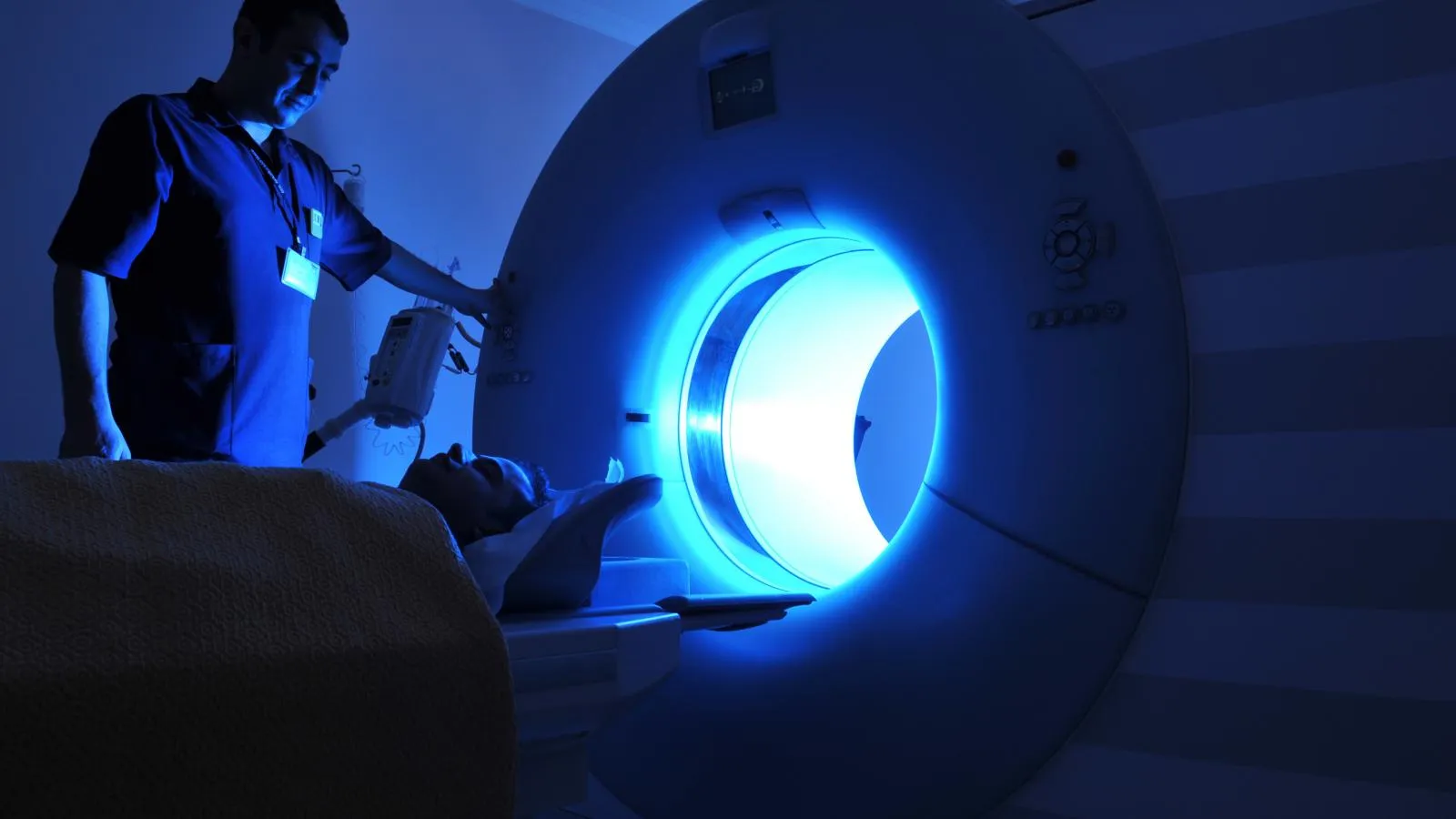
Medipix: From particles to patients
In the 1990s, researchers on the Large Hadron Collider were assembling the last pieces of detector electronics, designed to capture high-resolution images of particle collisions quickly and with no background noise. In the 1990s, researchers on the Large Hadron Collider were assembling the last pieces of detector electronics, designed to capture high-resolution images of particle…